Privacy choices

Choose how this site measures visits.

Essential browser storage remembers your choice. Optional analytics and advertising technologies load only with your permission. Read our privacy notice.

Skip to content

Technical guides

What Affects CNC Machining Costs?

Understand how part geometry, tolerances, material, quantity, finishing, and inspection shape a CNC machining quotation.

Engineering overview

Compare quotations against the same part definition.

There is no reliable universal price per part for CNC machining. A quotation is reviewed against the controlled drawing, material, quantity, finish, inspection scope, and delivery context. This guide explains the inputs that can change the manufacturing and verification work, so buyers can prepare comparable requests without assuming a price or capability before drawing review.

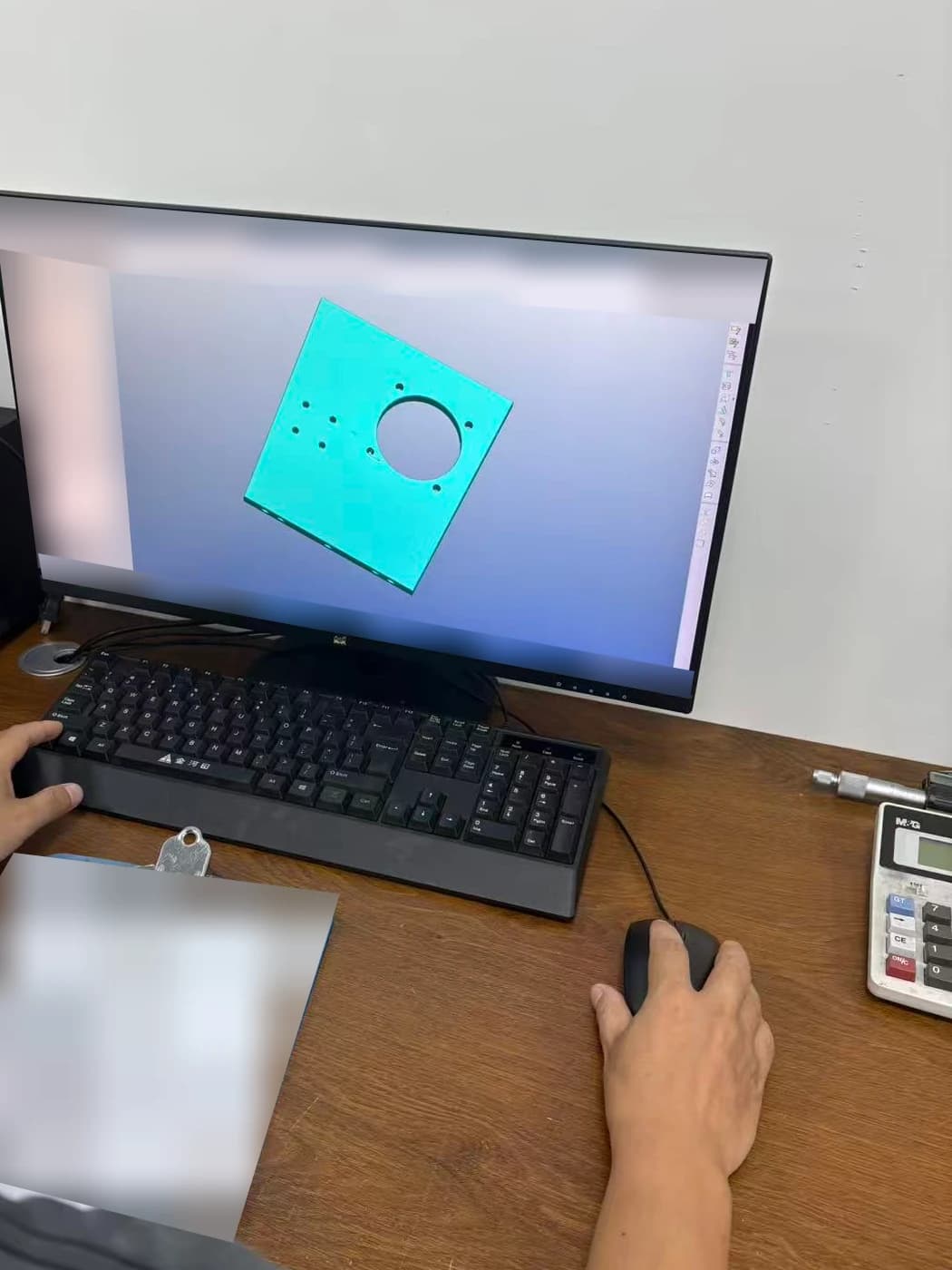
CAD model displayed at a workstationRepresentative visual

Process comparison

What changes the basis of a CNC quote?

Keep the requirements consistent when comparing quantities or suppliers. Project-specific pricing depends on the full model, drawing, order scope, and agreed acceptance criteria.

Cost factorWhat may need reviewWhat to clarify in the RFQ
Geometry and accessFeature depth, tool access, thin walls, internal radii, workholding, and the number of setups.Include the current 3D model and identify geometry that cannot change.
Tolerances and datumsWhich features control fit or function, how they relate to datums, and how acceptance will be verified.Apply explicit controls to critical features and state requested inspection records.
MaterialExact grade, condition, stock form, availability, and requested material documentation.Name the required grade or state whether an alternative may be proposed for approval.
Quantity and order patternRequested quantity, setup effort, and whether the request includes repeat or alternative batch sizes.List each quantity against the same part number, revision, and technical specification.
Finish and inspectionSpecified treatment, masking, post-finish dimensions, cosmetic criteria, and acceptance records.State the finish specification, affected surfaces, critical interfaces, and final inspection needs.
Revision and deliveryDrawing completeness, open assumptions, packaging, destination, and requested timing.Use a controlled revision and identify unresolved requirements, delivery destination, and target date.

Geometry sets the manufacturing discussion

A part's shape determines how tools reach its features and how the work can be held and oriented. Deep pockets, restricted access, thin walls, small internal radii, and features spread across multiple faces may change the process review. The complete geometry matters more than a simple label such as housing or bracket.

  • Provide a 3D model and a dimensioned drawing with matching revisions.
  • Identify fixed functional interfaces and features that may be adjusted after review.
  • Show deep features, cross-holes, undercuts, and thin sections clearly.
  • Ask for a DFM discussion when a feature or process assumption is still open.
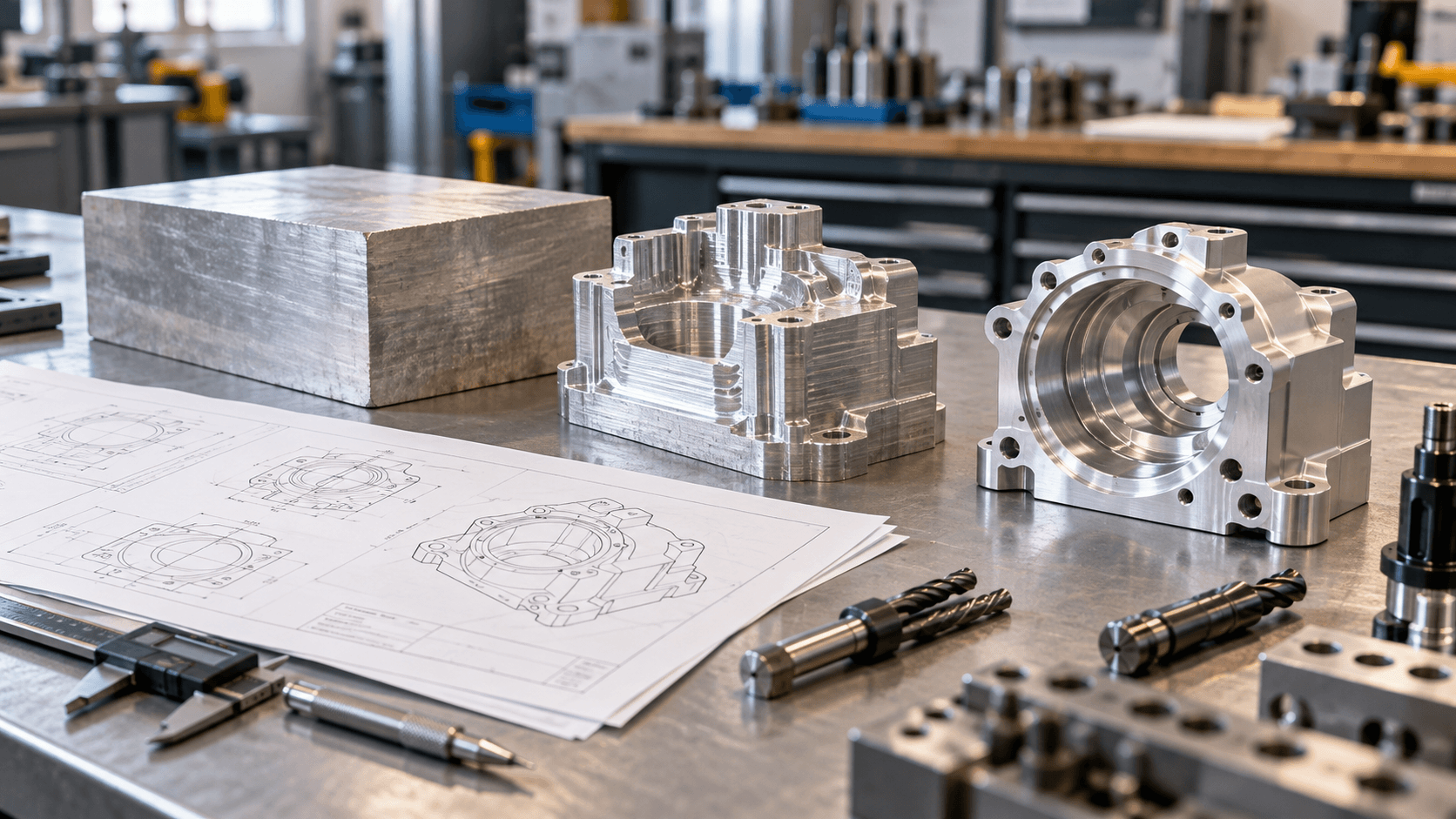
Review design-for-machining considerations

Tolerance and inspection scope belong together

A tight tolerance is not automatically necessary or automatically achievable. It should protect a defined fit, function, or acceptance need. The datum system, measurement approach, and requested records should be reviewed with the controlled dimensions rather than added as an afterthought.

  • Separate functional dimensions from general dimensions.
  • Reference geometric controls to datums that reflect the part's use.
  • State whether dimensions apply before or after surface treatment.
  • Request inspection reports or approval steps during quotation so scope can be agreed.
Specify machining tolerances
CAD model displayed at a workstation

Technical guides / Manufacturing context

Clear drawings keep technical decisions connected.

Representative media supports the engineering discussion and does not document a specific customer order.

Representative visual
03 / Project considerations

Material and finish change the requirement set

A broad material name may leave the grade, condition, or documentation open. Surface treatment can also affect appearance, dimensions, masking, and final acceptance. These choices need to be compared against the part's function and recorded consistently in the drawing and RFQ.

  • Name the exact grade and condition when fixed.
  • State whether the supplier may propose an alternative for approval.
  • Define finish type, target surfaces, masking, and cosmetic acceptance.
  • Identify any records required for material, treatment, or inspection.
Plan surface-finish requirements
04 / Project considerations

Compare quantities on a like-for-like basis

A quantity comparison is useful only when each tier uses the same drawing revision, material, finish, inspection, and delivery assumptions. Setup and order scope can affect the quote, but there is no universal rule that a particular volume guarantees a specific unit price or schedule.

  • List each requested quantity by part number.
  • Separate firm demand from forecasts or possible repeat orders.
  • Keep material, finish, packaging, and acceptance scope consistent across tiers.
  • Ask the supplier to identify quote assumptions and exclusions.
Prepare a complete CNC machining RFQ

Before you request a quote

What Affects CNC Machining Costs? FAQ

Use these answers to prepare the requirements for your part. Project details are confirmed during drawing review.

Does a tighter tolerance always increase CNC machining cost?

Not automatically. A tolerance should reflect the function and acceptance requirement. Tighter controls may require a different process or more verification, while unnecessary controls can restrict options without improving the part. Review the feature, datum, and inspection method together.

Will a larger batch always have a lower unit price?

A quote may change across quantity tiers, but the result depends on the part, setup, material, finishing, inspection, and order scope. Request each tier against the same controlled requirements instead of assuming a fixed volume discount.

Can a material or finish alternative reduce the quote?

An alternative may change sourcing or manufacturing requirements, but it must first be compared with the part's functional, environmental, appearance, and documentation needs. Do not substitute a material or finish without approval from the design owner.

What information helps produce a comparable quotation?

Provide the current 3D model and dimensioned drawing, part number and revision, quantities, material, finish, critical dimensions, inspection requirements, destination, and requested timing. Identify open questions so the quote can state its assumptions.

Can I compare quotations if suppliers make different assumptions?

First align the scope. Compare the same revision, material, finish, quantity, inspection records, packaging, and delivery basis, then review exclusions or proposed alternatives separately.

Ready for engineering review

Have a part to make?

Send your drawings and let our engineering team review your project.

We will provide your quotation within 24 hours after we receive complete drawings and project requirements.

Make the requirements clear

Include quantity, material, finish, critical dimensions, and any inspection requirements.

STEP / STP / IGES / IGS / STL / DWG / DXF / PDF / ZIP / XLSX / XLS / CSV