Privacy choices

Choose how this site measures visits.

Essential browser storage remembers your choice. Optional analytics and advertising technologies load only with your permission. Read our privacy notice.

Skip to content

Applications

Concept Prototypes

Use an early machined part to review form, fit, handling, and assembly direction before the complete design is fixed.

Engineering overview

Make the first physical build answer a focused question.

A concept prototype helps turn an early CAD model into a physical reference for engineering discussion. The goal is not to make every feature production-ready. It is to identify the interfaces, proportions, and assembly questions that must be resolved before the design advances.

We will provide your quotation within 24 hours after we receive complete drawings and project requirements.

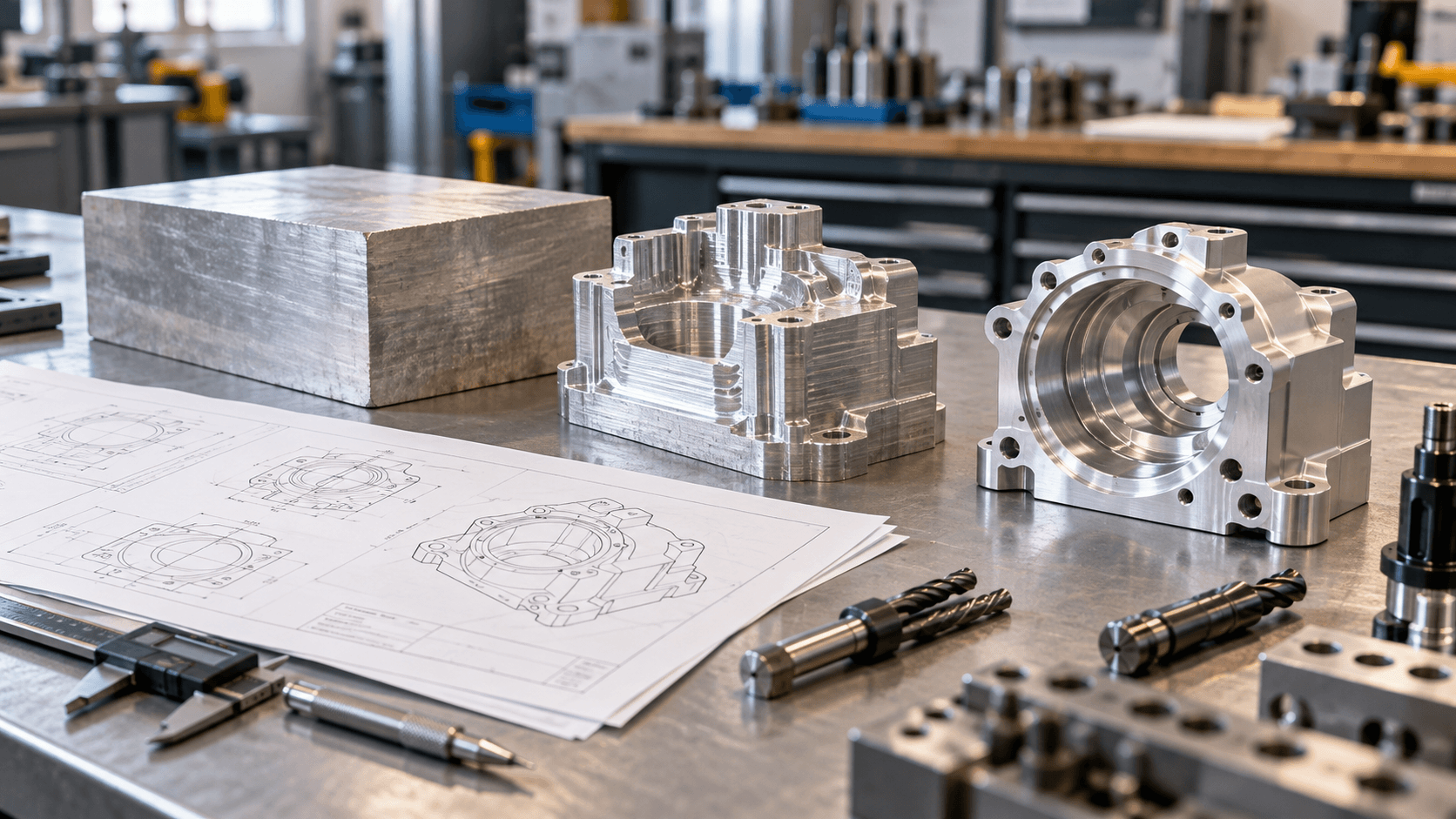
Milling tool cutting a metal workpieceRepresentative visual

Define the first-build question

Start with the decision the prototype needs to support. Form, fit, access, handling, and assembly may each require attention to different features.

  • Describe the assembly or review activity.
  • Identify the features that must be physically representative.
  • List assumptions that the build should confirm or challenge.
  • Explain how the result will influence the next revision.
Separate fixed and provisional details

Do not apply the same level of control to every early feature. Mark the interfaces that already matter and distinguish them from geometry that is likely to move.

  • Identify mating holes, locating faces, and envelope limits.
  • Mark cosmetic surfaces only when appearance is part of the review.
  • State which dimensions may change after the build.
  • Avoid adding tight tolerances without a functional reason.
Learn how to mark critical dimensions
Milling tool cutting a metal workpiece

Applications / Manufacturing context

Each build should answer a clear engineering question.

Representative media supports the engineering discussion and does not document a specific customer order.

Representative visual
03 / Project considerations

Prepare the current design package

Send the latest CAD model and any available drawing with a visible revision. The inquiry should explain the material intent, quantity, and review criteria even when some requirements remain open.

  • Provide overall dimensions and units.
  • State material preference or the function the material must support.
  • List the number of versions or parts required.
  • Identify planned design changes separately from current requirements.
Prepare the prototype RFQ
04 / Project considerations

Capture the iteration

After the build, connect observations to the tested part and revision. A short record of fit and assembly findings makes the next machining request clearer.

  • Photograph or note the evaluated interfaces.
  • Record changes against specific dimensions or features.
  • Update the drawing and model to the same new revision.
  • Decide whether the next build is conceptual or functional.
Move to functional prototype planning

Ready for engineering review

Have a part to make?

Send your drawings and let our engineering team review your project.

We will provide your quotation within 24 hours after we receive complete drawings and project requirements.

Make the requirements clear

Include quantity, material, finish, critical dimensions, and any inspection requirements.

STEP / STP / IGES / IGS / STL / DWG / DXF / PDF / ZIP / XLSX / XLS / CSV