Privacy choices

Choose how this site measures visits.

Essential browser storage remembers your choice. Optional analytics and advertising technologies load only with your permission. Read our privacy notice.

Skip to content

Services

CNC Milling Services

Custom CNC-milled housings, brackets, fixtures, and prismatic components, from engineering prototypes to production batches. Made to your drawing and agreed requirements.

Engineering overview

Custom milled parts, defined by your drawing.

VELMEC provides CNC milling services in Dongguan, China, for custom metal and engineering plastic parts. Milling creates flat faces, pockets, slots, holes, and features on multiple sides. We review your model and drawing together to define the material, machining approach, critical dimensions, finish, and inspection scope before production.

We will provide your quotation within 24 hours after we receive complete drawings and project requirements.

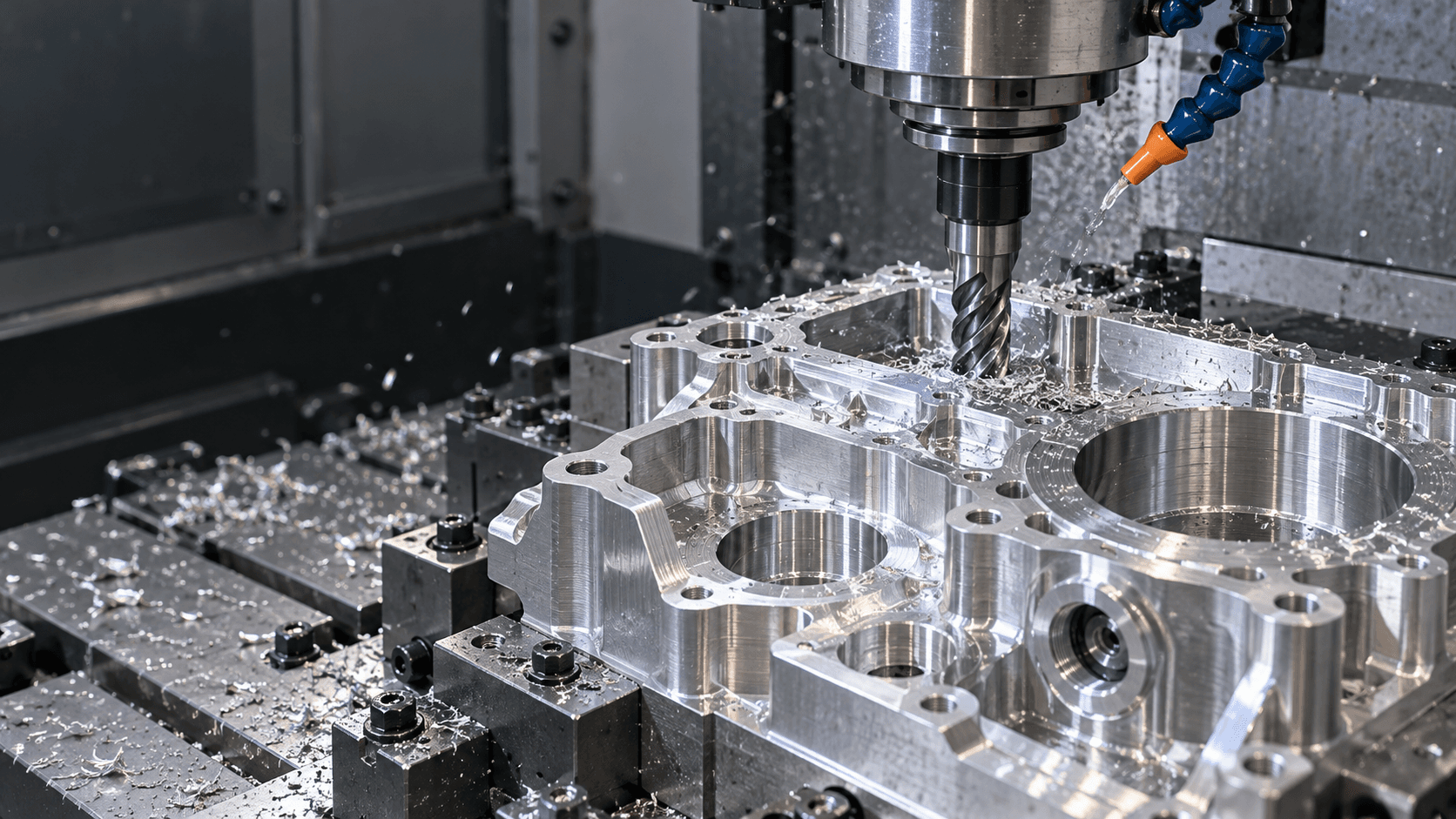
Milling tool cutting a metal workpieceRepresentative visual

Housings, brackets, and fixture components

Part function determines which features need the most attention. A housing may depend on the relationship between a bore and a mounting face; a bracket may depend on hole position and assembly clearance. Share that context with the drawing.

  • Housings: identify pockets, bores, sealing faces, and threaded connections.
  • Brackets and mounting plates: mark locating holes, mating faces, and flatness requirements.
  • Fixtures: define datums, locating features, and the surfaces that contact the workpiece.
  • Flag deep pockets, thin walls, undercuts, and features with restricted tool access.
Compare milling and turning for your geometry

Materials, tool access, and surface finish

Common material categories include aluminum, stainless steel, brass, and engineering plastics. The exact grade, condition, geometry, and finish are reviewed for each quote. Our milling scope includes 3-axis, 4-axis, and 5-axis work; the suitable approach depends on the part.

  • Specify the alloy or polymer grade and any required material documentation.
  • State overall dimensions; maximum part size is confirmed after drawing review.
  • Identify cosmetic faces, coating requirements, masking, and post-finish dimensions.
  • Allow for an internal corner radius where the design permits; the tool must reach the feature.
Review CNC machining material considerations
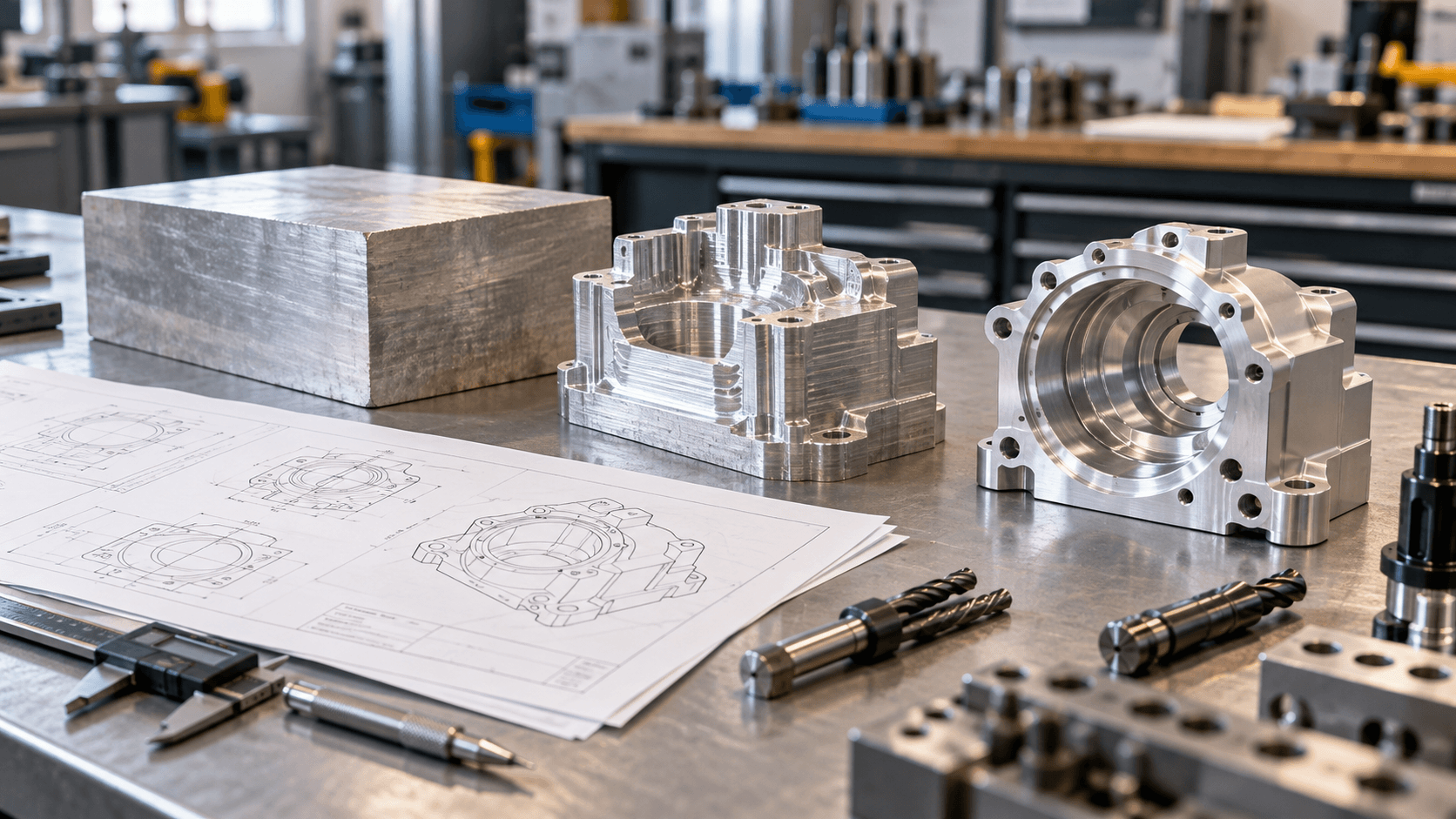
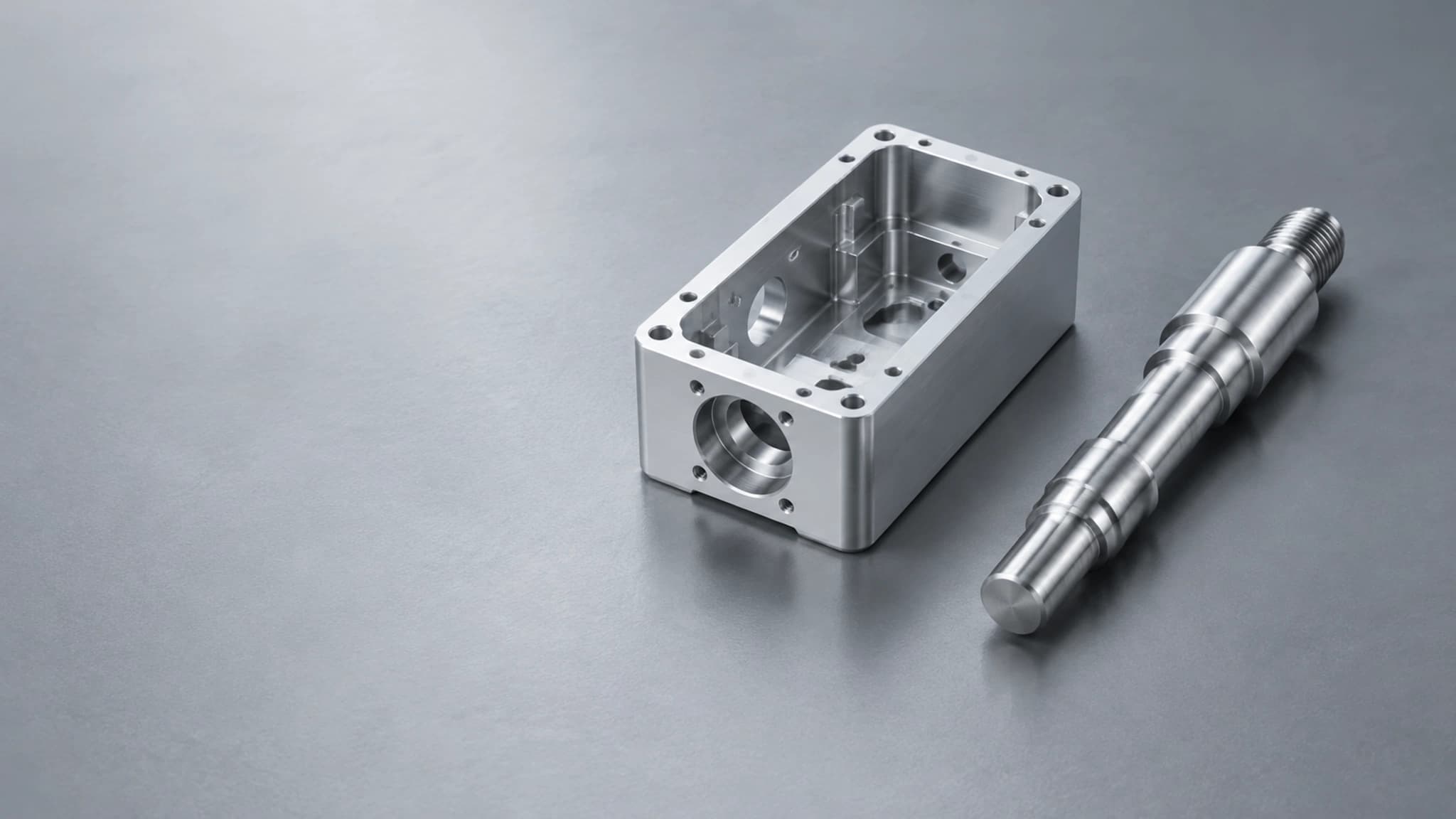
Representative manufacturing process and machined component arrangement

Services / Manufacturing context

Machining decisions begin with part geometry.

Representative media supports the engineering discussion and does not document a specific customer order.

Representative visual
03 / Project considerations

Milling tolerances and inspection priorities

Apply feature-level tolerances to the interfaces that control fit, location, or function. Achievable tolerances depend on material, nominal size, geometry, wall thickness, and inspection method. The specifications below describe capability ranges; selected critical features require drawing review before quotation.

  • Define datums for hole position, flatness, perpendicularity, or other geometric requirements.
  • Distinguish a functional surface requirement from a general finish note.
  • State whether acceptance applies before or after surface treatment.
  • Request dimensional reports or other records during quotation so scope and availability can be agreed.
How to mark critical dimensions on your drawing
04 / Project considerations

Prepare your CNC milling RFQ

Send a 3D model for geometry and a dimensioned drawing for tolerances, threads, datums, and notes. If the design is still developing, identify the open questions so the review can distinguish fixed requirements from proposed changes.

  • Attach STEP/STP and a PDF drawing when available, with matching revisions and units.
  • List quantity by part number, including alternative batch sizes you want priced.
  • Include material grade, finish, critical features, and required inspection records.
  • Provide the delivery destination and requested date for planning; production and shipping timing are confirmed with the quote.
Use the complete CNC RFQ checklist

Tolerances and Surface Finish

Parts without a technical drawing

Standard tolerance: ±0.127 mm, following ISO 2768-m.

Metal parts with technical drawings

Precision machining capability from IT7 to IT5, with feature tolerances from ±0.05 mm down to ±0.005 mm.

Engineering plastic parts

Machining capability from IT10 to IT8, with feature tolerances from ±0.30 mm down to ±0.03 mm.

Unspecified drawing tolerances

ISO 2768-f for metal parts and ISO 2768-m for plastic parts.

Minimum machined internal radius

R0.15 mm, depending on feature accessibility and tool selection.

Machined surface roughness

  • As machined: Ra 6.3–3.2 μm
  • Smooth machining: Ra 3.2–1.6 μm
  • Fine machining: Ra 0.8–0.4 μm

Tolerance capability depends on material, nominal dimension, geometry, wall thickness, machining process and inspection method. Tolerances down to ±0.005 mm apply to selected critical features and are confirmed through drawing review before quotation.

Before you request a quote

CNC Milling Services FAQ

Use these answers to prepare the requirements for your part. Project details are confirmed during drawing review.

Does my part need 3-axis, 4-axis, or 5-axis milling?

That depends on the number and orientation of features, tool access, and the relationship between critical surfaces. Send the model and drawing rather than selecting a process solely by its axis count. The proposed approach is reviewed against your part requirements.

Can CNC milling produce sharp internal corners?

A rotating milling tool leaves a radius in an internal corner. A smaller radius can restrict tool selection and access, especially in a deep pocket. If a square mating component must fit, identify that interface so corner relief or another approach can be discussed before production.

Can I request aluminum CNC milling or plastic parts?

Yes. Aluminum and engineering plastics are among the material categories we review for custom milled parts, alongside stainless steel and brass. Specify the exact grade and condition; availability and suitability are confirmed for your project.

Material selection considerations
Is a 3D model enough for a milling quotation?

A model communicates shape, but a dimensioned drawing is needed to communicate feature tolerances, datums, threads, surface requirements, and acceptance notes. If only a model is available, identify any critical requirements explicitly so the quotation can state its assumptions.

Ready for engineering review

Have a part to make?

Send your drawings and let our engineering team review your project.

We will provide your quotation within 24 hours after we receive complete drawings and project requirements.

Make the requirements clear

Include quantity, material, finish, critical dimensions, and any inspection requirements.

STEP / STP / IGES / IGS / STL / DWG / DXF / PDF / ZIP / XLSX / XLS / CSV