Privacy choices

Choose how this site measures visits.

Essential browser storage remembers your choice. Optional analytics and advertising technologies load only with your permission. Read our privacy notice.

Skip to content

Technical guides

Material Selection for CNC Machined Parts

Compare functional, environmental, finishing, documentation, and sourcing inputs before fixing the material grade.

Engineering overview

Select the grade from the application, not only the material family.

Material selection affects function, machining, finishing, inspection, and sourcing. Naming only a broad family such as aluminum or plastic can leave important assumptions unresolved. Specify the exact grade and condition when they are fixed, or explain the required performance when alternatives may be reviewed.

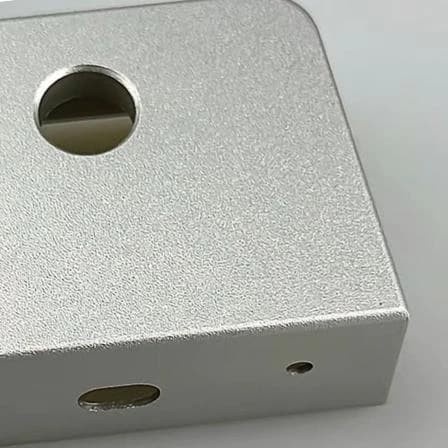
Precision-machined aluminum componentRepresentative visual

Process comparison

Start with the application requirements

These are general selection considerations, not substitutes for engineering analysis or confirmation of stock availability for a specific order.

Material familyCommon reasons to evaluate itQuestions to resolve
AluminumLow mass, machinability, and access to several finish routes.Exact alloy and temper, strength need, cosmetic surface, coating, and operating environment.
Stainless steelCorrosion resistance, strength, wear, or temperature requirements.Exact grade, condition, exposure, surface requirement, and any passivation or documentation need.
Brass or copper alloyElectrical, thermal, corrosion, appearance, or low-friction considerations.Exact alloy, conductivity or mechanical requirement, finish, and any restricted-material requirement.
Engineering plasticElectrical isolation, low mass, chemical behavior, wear, or friction requirements.Exact polymer grade, temperature, moisture, dimensional stability, stress, and surface condition.

Define the load and environment

Start with what the part experiences in service. Mechanical load, temperature, chemicals, moisture, electrical behavior, wear, and mass can all change the suitable grade.

  • Describe static, cyclic, impact, or wear conditions where relevant.
  • State temperature range and chemical exposure.
  • Identify corrosion, conductivity, insulation, or mass priorities.
  • Name any customer or regulatory material restrictions.
Review the listed material families

Specify grade and condition

A material-family name is not a complete specification. Alloy, temper, heat-treatment state, polymer grade, reinforcement, and stock condition can affect both performance and manufacturing review.

  • Use the exact grade and condition on the drawing or bill of materials.
  • State whether substitutions are prohibited or may be proposed.
  • Request material records during quotation if they are required.
  • Keep material notes consistent across model, drawing, and purchase documents.
Prepare a complete RFQ
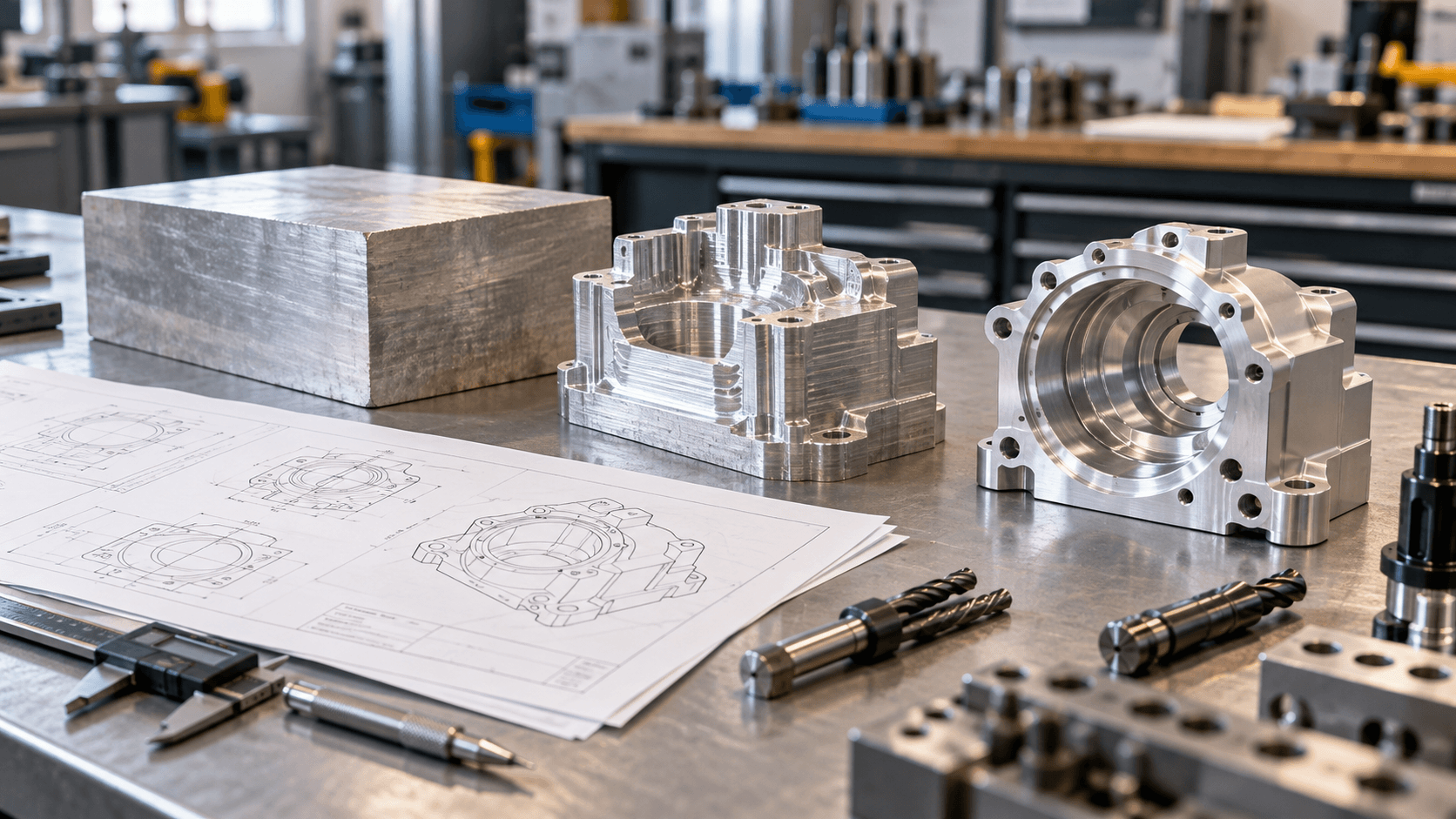
Precision-machined aluminum component

Technical guides / Manufacturing context

Clear drawings keep technical decisions connected.

Representative media supports the engineering discussion and does not document a specific customer order.

Representative visual
03 / Project considerations

Review finish and dimensional interaction

A selected finish must be compatible with the grade and the intended function. Coating buildup, masking, edge condition, and cosmetic expectations can affect critical interfaces.

  • Identify the finish specification and applicable surfaces.
  • Mark masking boundaries and electrical or grounding contacts.
  • Clarify whether critical dimensions apply before or after finishing.
  • Define cosmetic acceptance separately from dimensional acceptance.
Plan the surface finish
04 / Project considerations

Handle alternatives explicitly

If cost, availability, or schedule leads to an alternative proposal, compare it against the original functional requirements before changing the specification.

  • Ask for the full proposed grade and condition.
  • Review mechanical, environmental, finish, and documentation differences.
  • Record the approved change in the controlled drawing or purchase requirement.
  • Do not treat a quoted alternative as automatically approved.
Submit the selected material for review

Before you request a quote

Material Selection for CNC Machined Parts FAQ

Use these answers to prepare the requirements for your part. Project details are confirmed during drawing review.

Can I request only 'aluminum' or 'stainless steel'?

That may be enough for an early discussion, but a production quotation needs the exact grade and condition or explicit permission to review alternatives. Different grades can have different functional, finishing, and sourcing implications.

Should a prototype use the final material?

Use the material needed to answer the prototype question. A fit check may have different priorities from a load, wear, temperature, corrosion, or finishing test. Record any temporary substitution so it does not carry into production unnoticed.

Can an alternative material reduce lead time or cost?

Possibly, but it must be compared against the required performance, finish, documentation, and acceptance criteria. Any approved substitution should be recorded in the controlled specification.

When should material documentation be requested?

During quotation. State the required record type, part identification, and traceability expectation before the order is released so its availability and scope can be confirmed.

Ready for engineering review

Have a part to make?

Send your drawings and let our engineering team review your project.

We will provide your quotation within 24 hours after we receive complete drawings and project requirements.

Make the requirements clear

Include quantity, material, finish, critical dimensions, and any inspection requirements.

STEP / STP / IGES / IGS / STL / DWG / DXF / PDF / ZIP / XLSX / XLS / CSV